Sydney Canoe Polo

A partnership proposal from a new non-profit community club, founded in 2025. We want to bring canoe polo to more of Sydney. This page shows where we play and who lives nearby, and it marks what exists now, what is planned and what is only an aspiration.

Key facts

  • 4.4M
    People in the catchment
    ABS ERP, 30 June 2025
  • 27
    Local government areas
    ABS ERP, 30 June 2025
  • 2
    Sydney 2000 Olympic venues
    Being explored, not booked
  • WSI Airport
    New international airport
    Opened 25 October 2026

Executive summary

Sydney Canoe Polo Club Inc. was founded in 2025 and wants to grow the sport across Sydney. We are exploring two Sydney 2000 Olympic venues, and we want a place to learn and train in each of three hubs. About 4.4M people live in the 27 LGAs grouped under those hubs (ABS ERP, 30 June 2025). That is the population of those areas, not a count of expected participants.

Where things stand

Exists now
  • 4.4M people live in the 27 LGAs grouped under our three hubs (ABS ERP, 30 June 2025).
  • Sydney Canoe Polo Club Inc. is a non-profit incorporated association, founded in 2025 and affiliated with Paddle Australia and Paddle NSW.
  • Penrith Whitewater Stadium is the club's current base, and the club stores goals and pitch equipment there. Paddle Australia Summer Series 1 there on 5 to 6 December 2026 is confirmed.
  • Western Sydney International Airport opened on 25 October 2026, about 24 km by road from the regatta centre (OpenStreetMap routing, October 2026).
Planned or being explored
  • Events at Sydney International Regatta Centre: being explored. Indicative pricing requested October 2026. Not booked.
  • Pool hire at Sydney Olympic Park Aquatic Centre: being explored. Not booked.
  • Penrith City Council: early discussions.
  • Manly Andrew (Boy) Charlton and Warringah pools: Northern Beaches Council has offered pool time. The club still has to apply. Not booked.
  • Parramatta Aquatic Centre: Enquiry sent in October 2026. Automatic reply only so far. Not booked.
  • Athlete development programme at Penrith Whitewater Stadium: in development.
  • School and university league partnerships: planned.
  • 2028 Sydney Invitational and paddling championships: planned, early stage.
Aspirational
  • Club 2030 plan: a target of 3,000 members.
  • An international tournament calendar by 2028 is a goal.
  • Training at the Sydney Academy of Sport and Recreation and public access to the Parramatta River are aspirations. Neither has an agreement.
  • People in Taiwan, Malaysia, New Zealand and Singapore have expressed interest in canoe polo in Sydney (Facebook and email messages to the club). This is interest, not a commitment to attend.
  • The growth curves to 2035 are illustrative and are not forecasts.

Our three hubs

Catchment figures: ABS ERP, 30 June 2025. The colours match the map.

Western Hub: 1.9M

The club's current base at Penrith Whitewater Stadium, with events being explored at the regatta centre

  • Sydney 2000 Olympic venues
  • WSI Airport access (about 24 km by road, about 30 minutes' drive without traffic; OpenStreetMap routing, October 2026)
  • 1.9M people in the hub catchment

Central Hub: 2.0M

Central transport hub and business district

  • Transport connectivity
  • Business district access
  • 2.0M people in the hub catchment

Northern Hub: 0.5M

A possible training area around Narrabeen Lakes and the Sydney Academy of Sport and Recreation

  • A high-performance pathway (aspirational)
  • 0.5M people in the hub catchment
  • Location of the Sydney Academy of Sport and Recreation

The club

Sydney Canoe Polo Club Inc. is a non-profit incorporated association. ABN 79 594 344 970. Incorporation number INC2501016. It is affiliated with Paddle Australia and Paddle NSW. The club follows the rules and policies of Paddle NSW and Paddle Australia, including the Paddle Australia National Integrity Framework. The club website gives the insurance details and the club terms.

What a partner supports

A partner helps a new community club at Penrith Whitewater Stadium put more people on the water, and puts its name alongside the sport as it grows.

Our hubs and who lives nearby

How the catchment and the map work

  • Catchment means the people who live in the 27 LGAs grouped under the three hubs. It does not mean expected participants.
  • The club grouped those LGAs by hub. The grouping is a judgement, not a distance calculation.
  • The map uses a different method. It gives each ABS SA2 area the colour of its nearest hub, by straight-line distance, with Census 2021 figures.
  • The map also covers areas outside the 27 LGAs, and many suburbs in the Western Hub group are closer to Parramatta than to Penrith. Map areas therefore do not add up to the hub totals.

Our three hubs

Each hub pairs a place to learn and train with a possible competition venue. Only Penrith Whitewater Stadium is in use today.

Photo of Western Hub

Western Hub

The club's current base at Penrith Whitewater Stadium, with events being explored at the regatta centre

1.9M people in the catchment (ABS ERP, 30 June 2025)

Grassroots development

Penrith Whitewater Stadium

The club's current base. The club stores goals and pitch equipment here. Paddle NSW agreed in October 2026 that the club takes custody of the Paddle NSW canoe polo trailer, which will be stored here. Paddle Australia Summer Series 1 confirmed for 5 to 6 December 2026, hosted by the club.

Capacity: Grassed spectator areas for 3,000 to 5,000 people. Source: Penrith City Council, Events Prospectus (2015)

  • Athlete development programme at Penrith Whitewater Stadium (in development).
  • School and university league partnerships (planned).

Event venue

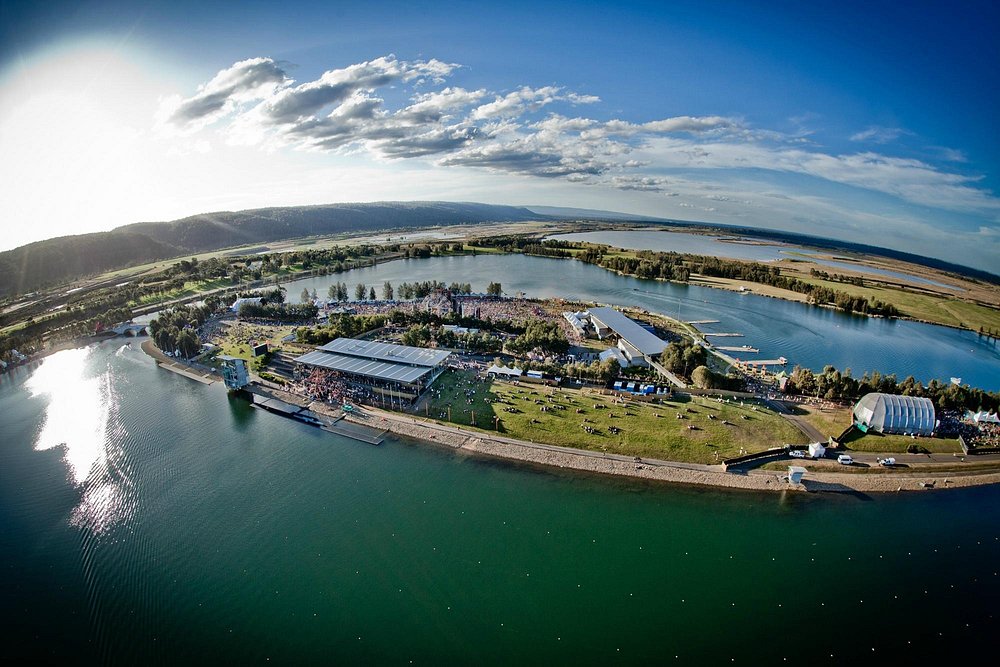
Sydney International Regatta Centre

Being explored. The club requested indicative pricing in October 2026. Not booked.

Capacity: 1,000 seats in the spectator pavilion; 20,000 on the island, depending on overlay; 30,000 whole of venue. Source: NSW Government, Sydney International Regatta Centre: stage an event (accessed 2 November 2026)

  • Sydney 2000 Olympic rowing and canoe sprint venue
  • WSI Airport: about 24 km by road, about 30 minutes' drive without traffic; OpenStreetMap routing, October 2026
  • Work with the venue on spectator areas and broadcast needs for international events (aspirational).
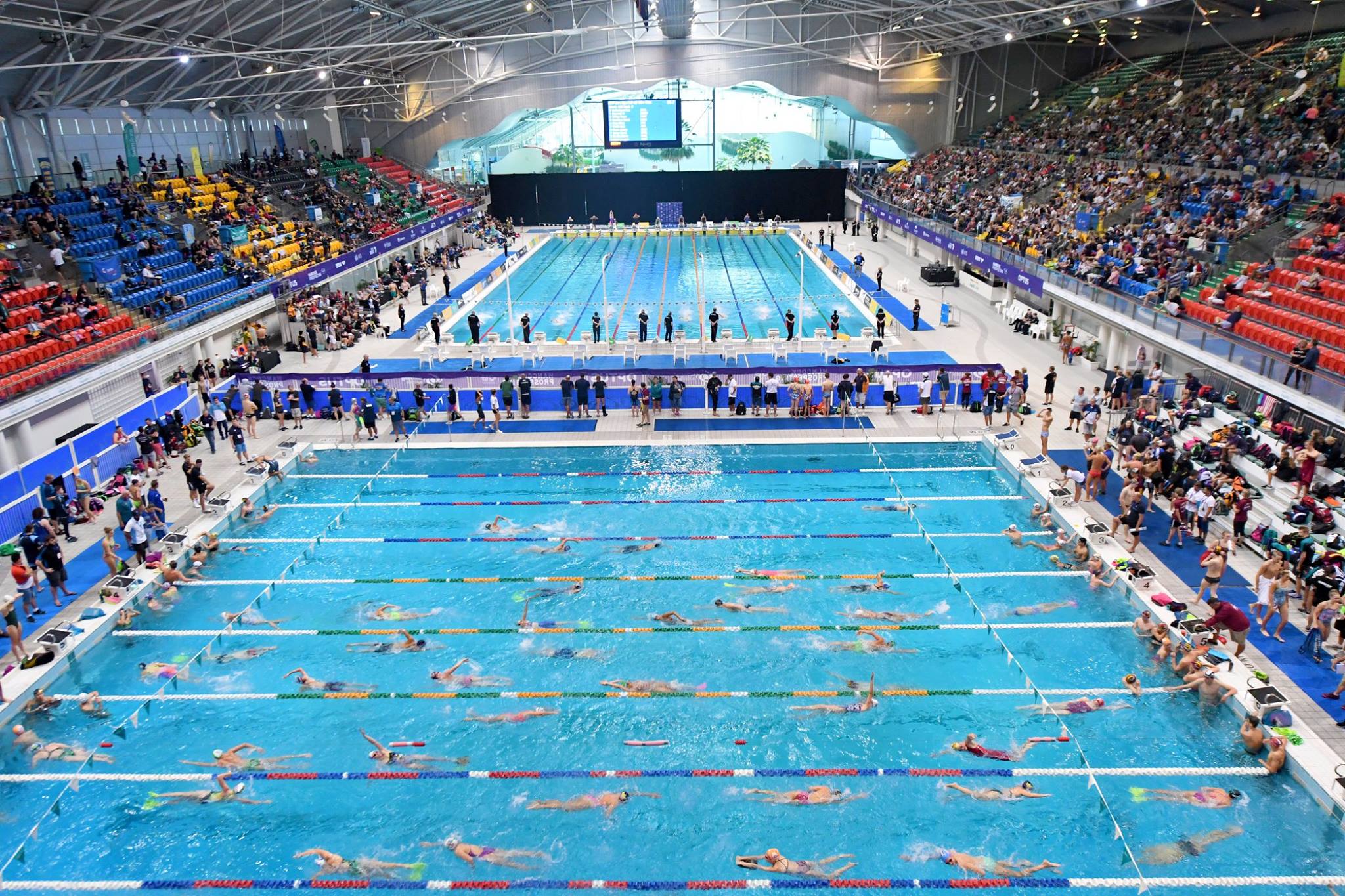
Photo of Central Hub

Central Hub

Central transport hub and business district

2.0M people in the catchment (ABS ERP, 30 June 2025)

Grassroots development

Parramatta River

Aspirational. No access arrangement is in place.

  • Start a social canoe polo league for workplaces in the Parramatta CBD (planned).
  • Work with local councils on public access to the Parramatta River for paddle sports (aspirational).
  • Parramatta Aquatic Centre: Enquiry sent in October 2026. Automatic reply only so far. Not booked.

Event venue

Sydney Olympic Park Aquatic Centre

Pool hire being explored. In September 2025 the club received an initial guide to fees. The carnival season (November to April) limits availability. Not booked.

  • Sydney 2000 Olympic swimming venue
  • Indoor pools
Photo of Northern Hub

Northern Hub

A possible training area around Narrabeen Lakes and the Sydney Academy of Sport and Recreation

0.5M people in the catchment (ABS ERP, 30 June 2025)

Grassroots development

Sydney Academy of Sport and Recreation

Aspirational. No agreement with the academy is in place.

  • Set up a high-performance training programme for the club's strongest players (aspirational).
  • Seek access to sports science and medical facilities at the academy (aspirational).
  • Manly Andrew (Boy) Charlton and Warringah pools: Northern Beaches Council has offered pool time. The club still has to apply. Not booked.

Event venue

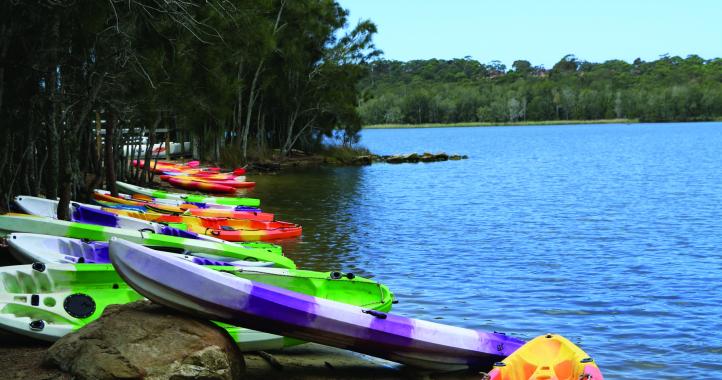
Narrabeen Lakes

Aspirational. No event is planned here yet.

Who lives nearby

Catchment means the people who live in the 27 LGAs grouped under the three hubs. It does not mean expected participants.

Population by hub
HubPopulation
Western Hub1,927,052
Central Hub1,972,384
Northern Hub513,332

LGAs grouped under each hub (ABS ERP, 30 June 2025)

Western Hub: 1,927,052
LGAPopulation
Penrith231,701
Blacktown449,385
Hawkesbury69,299
Blue Mountains79,236
The Hills222,675
Fairfield213,677
Liverpool261,231
Camden146,483
Campbelltown191,285
Wollondilly62,080
Central Hub: 1,972,384
LGAPopulation
Parramatta279,014
Cumberland256,906
Canterbury-Bankstown389,687
Inner West193,125
Canada Bay93,006
Strathfield49,203
Burwood43,927
City of Sydney241,797
Ryde141,693
Hornsby155,484
Ku-ring-gai128,542
Northern Hub: 513,332
LGAPopulation
Northern Beaches272,656
North Sydney73,705
Willoughby80,520
Mosman29,374
Lane Cove43,094
Hunters Hill13,983
Age distribution, Age bands, Greater Sydney, ABS Census 2021
Age bandPeopleShare
0-4312,3646.0%
5-14650,84012.4%
15-24637,82812.2%
25-34811,31415.5%
35-44777,74614.9%
45-54667,16712.8%
55-64579,16811.1%
65+794,71315.2%
Youth (15-24)
637,828
People aged 15 to 24 in Greater Sydney (ABS Census 2021): the school, university and junior pathway age group.
Active adults (25-54)
2,256,227
People aged 25 to 54 in Greater Sydney (ABS Census 2021): the age group for recreational and competitive play.
Younger adults (25-44)
1,589,060
People aged 25 to 44 in Greater Sydney (ABS Census 2021).

Benchmark: Hawke's Bay

We apply the membership rate of one New Zealand club to the 4.4M people in the Sydney catchment. The results are illustrative. They show a range and are not forecasts.

Illustrative scenarios, not forecasts
ScenarioBasisMembersShare of catchmentMultiple of club 2030 plan
Club 2030 plan (target)Sydney Canoe Polo Club target3,0000.068%1.0x
Illustrative: quarter of Hawke's Bay peak rate25% of the 2019 peak rate6,1000.139%2.0x
Illustrative: half of Hawke's Bay peak rate50% of the 2019 peak rate12,2000.278%4.1x
Illustrative: Hawke's Bay rate after Covid800 / 179,70019,6000.445%6.5x
Illustrative: Hawke's Bay peak rate1,000 / 179,700 (2019)24,5000.556%8.2x

The Hawke's Bay figures

Population, 30 June 2025 (Stats NZ)
179,700
Peak members, 2019 (personal communication)
about 1,000
Peak rate, members over population
0.556%
Members after Covid (personal communication)
about 800

The club peaked at about 1,000 members in 2019 and had about 800 after Covid. Source: Hawke's Bay Canoe Polo Club (pers. comm., Nov 2024). Members are club and school league registrations (school players register with the club).

Limits of this benchmark

  • It is one regional club in New Zealand, not a sample of clubs.
  • Its counts include school league registrations, because school players register with the club.
  • The 2019 peak and the figure after Covid come from a personal communication, Hawke's Bay Canoe Polo Club (pers. comm., Nov 2024), not a published record. The only published figure is over 700 members (NZCT, December 2020).
  • The rates divide those counts by the 30 June 2025 population, not the population of the year of each count.
  • Participation rates in a regional area may not transfer to a large city.
  • Canoe polo reached Hawke's Bay in 1991 (NZCT, December 2020), and the club peaked 28 years later. The growth curves on this page therefore stop at half of the peak rate.

How Sydney differs

  • About 25 times the population (4.4M against 179,700)
  • Canoe polo reached Hawke's Bay in 1991 (NZCT, December 2020). Our club was founded in 2025, so it has far less history to build on.
  • Western Sydney International Airport, opened 25 October 2026

Growth scenarios

Illustrative S-curve, not a forecast. The curves start at the club's launch in 2025, not from a member count, and this section shows them from 2030. They show a range for discussion.

Assumption: each scenario follows an S-curve from the club's launch in 2025 to its 2035 total. The curve's shape is assumed. No event or date sets it. The club 2030 target of 3,000 members is above both curves in 2030 (1,000 and 2,000).

Illustrative S-curve, not a forecast: 2030 to 2035. Members at each year.
YearIllustrative: quarter of Hawke's Bay peak rateIllustrative: half of Hawke's Bay peak rate
20301,0002,000
20312,2804,550
20323,9507,900
20335,23010,450
20345,86011,710
20356,10012,200

Milestones

  1. 2026
    Exists now
    Airport open; Summer Series 1 confirmed

    Western Sydney International Airport opened on 25 October 2026. Paddle Australia Summer Series 1 at Penrith Whitewater Stadium on 5 to 6 December 2026 is confirmed, and the club hosts it.

  2. 2028
    Planned or being explored
    Sydney Invitational and paddling championships

    Planned, early stage, not booked: a Sydney Invitational canoe polo tournament at Sydney International Regatta Centre. Schools and intervarsity championships could run as multi-discipline paddling events across the regatta centre and Penrith Whitewater Stadium (canoe polo, sprint, slalom, kayak cross). Penrith Whitewater Stadium is the club's current base, and the club stores goals and pitch equipment there.

  3. 2030
    Aspirational
    Club 2030 plan (target)

    A target of 3,000 members. This is a target and not a forecast.

  4. 2035
    Aspirational
    Illustrative membership scenarios

    6,100 to 12,200 members on the two growth curves. These illustrate a range and are not a forecast.

Economic impact

Two measures, each with its source. Neither is a forecast, and neither is money the club or a partner receives.

Social value

Social value, not spending or revenue.

The Australian Sports Commission estimates that playing community club sport about once a week is worth $5,932 in social benefits for each participant each year.

  • The figure dates from 2018 and is not indexed.
  • It applies to people who play club sport about weekly. Members are not necessarily weekly participants, so the target value below may overstate it.

At the club 2030 target of 3,000 members, if all members were weekly participants, the figure gives $17.8M a year. This is a target and not a forecast.

Source: Australian Sports Commission and Griffith Business School, Economic value of community club-based sport in Australia (2018), figure as cited by the Clearinghouse for Sport.

Event visitor spend: illustrative

A national championship

Illustrative, not a forecast. The visitor numbers and nights are round-figure assumptions for one event. The rates are survey estimates (Tourism Research Australia via Destination NSW, year ending December 2025).

Illustrative example of visitor spend at one event, not a forecast
VisitorsNumberNightsRateSpend
Domestic overnight visitors3003$370$333,000
International visitors205$156$15,600
Day-trip visitors200day trip$159$31,800
Total$380,400

Source rates for Sydney, year ending December 2025

  • Domestic overnight visitor, per night$370
  • Domestic overnight visitor, per visitor$957
  • International visitor, per night$156
  • International visitor, per visitor$3,595
  • Domestic day-trip visitor, per visitor$159

Source: Tourism Research Australia via Destination NSW, Travel to Sydney visitor profile, year ending December 2025.

Want these numbers for your board?

We will walk you through the assumptions behind any scenario and what a partnership would look like in practice.

Start a conversation

What canoe polo is

Canoe polo is a team sport played in kayaks: five players a side and two halves of 10 minutes (Paddle Worldwide). All ages are welcome.

Grow the sport with us

We welcome complete beginners and run trial sessions. A partner helps us put more people on the water, host bigger events, and keep the sport open to everyone.

Talk to us

We also accept tax-deductible donations through the Australian Sports Foundation. You can give to our Junior Canoe Polo Equipment Fund.

Sources and method

Every figure on this page comes from one of these sources, is computed from them, or is a labelled assumption.

Method

  • Catchment means the people who live in the 27 LGAs grouped under the three hubs. It does not mean expected participants.
  • The club grouped those LGAs by hub. The grouping is a judgement, not a distance calculation.
  • The map uses a different method. It gives each ABS SA2 area the colour of its nearest hub, by straight-line distance, with Census 2021 figures.
  • The map also covers areas outside the 27 LGAs, and many suburbs in the Western Hub group are closer to Parramatta than to Penrith. Map areas therefore do not add up to the hub totals.
  • Scenario totals apply a Hawke's Bay membership rate to the catchment and round down to the nearest 100.
  • Assumption: each scenario follows an S-curve from the club's launch in 2025 to its 2035 total. The curve's shape is assumed. No event or date sets it.
  • The growth curves use only the quarter and half peak rates, and they appear from 2030.
  • The visitor numbers and nights in the event example are round-figure assumptions. The spend rates are survey estimates.
  • Social value uses the Australian Sports Commission figure from 2018, without indexation.

Sources